Every single day, the global transport sector pumps nearly 23 million tonnes of CO₂ into the atmosphere. Roads, skies, and seas burn fossil fuels at a pace the planet can no longer absorb.
In 2024 alone, transport emissions reached around 8.4 gigatonnes, contributing 16–20% of global energy-related emissions — with road transport responsible for over 70% of that share.
The consequences are no longer distant: extreme weather, rising sea levels, and worsening air quality are already shaping lives across the world.
But quietly, on nearly 70,000 kilometres of electrified track, a different story is unfolding.
India’s Transport Challenge and a Powerful Response
India, the world’s fastest-growing major economy, faces a similar challenge at scale. Transport contributes 12–14% of the country’s energy-related CO₂ emissions, amounting to roughly 350–400 million tonnes annually — or nearly 1 million tonnes every day.
Rapid urbanisation, rising vehicle ownership, and increasing freight demand have historically pushed emissions higher. Without intervention, these emissions could double by 2050.
Yet one system is actively bending that curve.
The Climate Hero: Indian Railways
In FY 2025–26, Indian Railways carried 7.41 billion passengers; over 20 million people every day. That’s more daily movement than most countries achieve in a month.
And it did this while emitting just 2.02 million tonnes of CO₂, down sharply from 3.32 million tonnes the previous year.
Indian rail transport emits 89% less CO₂ per kilometre than road transport. A single public system moves eight times more people daily than the entire US domestic airline industry — at a fraction of the environmental cost.
This is what large-scale, low-carbon mobility looks like.
Turning Ambition into Action
Indian Railways didn’t arrive here by accident; it engineered this transformation through sustained, multi-pronged action.
1. Electrification at Scale
Over 99% of the broad-gauge network is now electrified, up from just 21,000 km before 2014. Full electrification is expected by the end of 2026, effectively phasing out diesel for regular operations.
2. Freight Shift That Matters
Since 2014, shifting over 2,672 million tonnes of freight to rail has avoided 143 million tonnes of CO₂ emissions — equivalent to planting over 1.21 billion trees.
Rail freight emits just 9.5 g CO₂ per tonne-km, compared to 60–110 g for road transport. The efficiency gap is massive and decisive.
3. Renewable Energy Integration
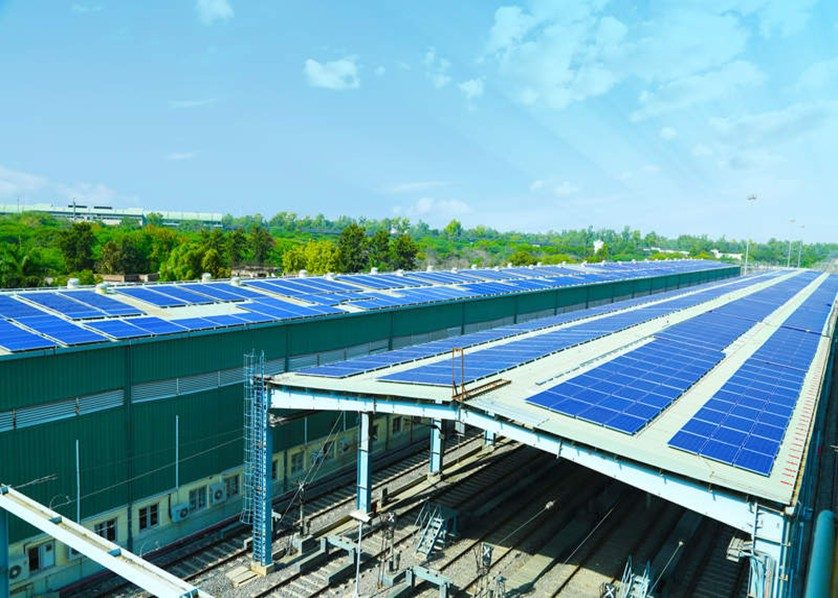
More than 2,200 stations and buildings are now equipped with solar installations. With a projected 10 GW traction energy demand by 2030, Indian Railways is steadily reducing dependence on coal-based grid power and moving toward cleaner energy sources.
The Technology Behind the Transformation
Beyond large-scale shifts, operational innovations are quietly driving efficiency gains.
Head-On Generation (HOG)
Head-On Generation technology allows trains to draw power directly from electric locomotives instead of diesel generators. The impact is significant:
- ■ Elimination of diesel generator cars
- ■ Reduction of emissions by thousands of tonnes
- ■ Noise levels dropping from ~100 dB to near silence
- ■ Substantial cost savings
LHB (Linke Hofmann Busch) Coaches
Complementing HOG are LHB coaches, designed with lightweight, modern materials. They offer:
- ■ Better energy efficiency
- ■ Higher safety standards
- ■ Improved ride quality
- ■ Lower power consumption
Together, these upgrades ensure that every new train is cleaner, quieter, and more efficient than the last.
Ahead of Schedule and Ahead of the World
Indian Railways is on track to achieve Scope 1 net-zero emissions by 2025–26, nearly five years ahead of its 2030 target.
The cumulative emissions savings already rival the annual output of entire nations. At a time when much of the world is still debating sustainable mobility, India is already operating one of the largest low-carbon transport systems on the planet.
What This Means for Businesses
This transformation offers a powerful lesson:
Net-zero is not achieved through one bold move; it’s built through consistent, measurable progress.
Indian Railways didn’t change overnight. It:
- ■ Measured emissions
- ■ Set clear targets
- ■ Invested in electrification
- ■ Integrated renewables
- ■ Optimised operations step by step
The same principles apply to businesses. Whether you run a manufacturing plant, logistics fleet, or corporate operation, the journey begins with understanding your current footprint. From there, structured actions — energy efficiency, electrification, and renewable integration — can drive both sustainability and cost savings.
The Bigger Picture
Indian Railways is more than a transport system; it’s a cornerstone of India’s green transition. It proves that economic growth and sustainability are not opposing forces, but can scale together when backed by the right infrastructure and intent.
How Build to Sustain Can Help
Companies looking to emulate the remarkable decarbonisation journey of Indian Railways can accelerate their own sustainability transformation with expert guidance from Build to Sustain, a leading ESG and sustainability consulting firm in India.
Carbon Footprint Assessment
We measure your organisation’s emissions accurately across Scope 1, 2, and 3 — identifying hotspots and the most cost-effective reduction levers.
Science-Based Net-Zero Targets
We help you set ambitious yet credible targets aligned with global frameworks, so your roadmap is taken seriously by investors, regulators, and customers.
Electrification & Renewable Integration
From fleet electrification to rooftop solar and PPA strategy, we design practical roadmaps that mirror the railways’ successful shift to near 100% electrification and large-scale solar.
BRSR & Sustainability Reporting
Custom sustainability ratings, BRSR compliance, and disclosure support — turning your sustainability progress into a competitive advantage.
Through actionable strategies, we enable organisations to reduce emissions, cut operational costs, enhance brand reputation, attract green investments, and turn sustainability into a competitive advantage. Whether you run a manufacturing unit, logistics company, or corporate fleet, partnering with Build to Sustain ensures your net-zero goals are not just aspirational but achievable and measurable.
Ready to build a sustainable future for your business?

Last reviewed: April 2026