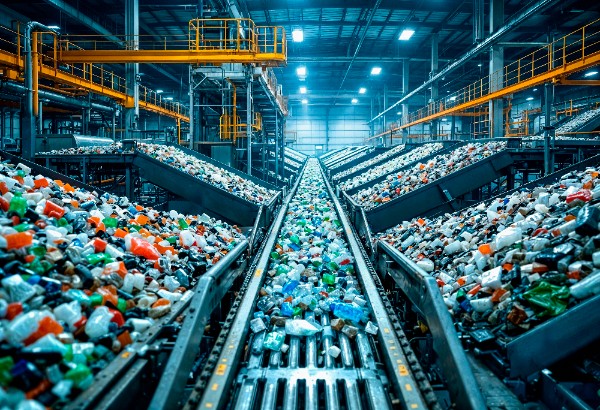
On June 12, 2026, the Industrial Waste Management Association convened a seminar in Coimbatore focused on accelerating industrial decarbonisation and net zero transitions. A key session delivered by Ms. Kayalvizhi, Assistant Director, MSME, Government of India, detailed central government schemes designed to scale Micro, Small, and Medium Enterprises.
Her presentation addressed critical bottlenecks facing the sector, including market access, operational inefficiencies, quality standards, innovation constraints, and the capital burden of solo transformation. India’s MSME sector generates nearly 30% of national GDP and employs over 110 million people, yet operational hurdles around waste management, liquidity, and global competitiveness remain acute. This guide distills key insights from the seminar and official policies into a practical roadmap for MSME leaders pursuing sustainable scale.
1. Public Procurement Policy for MSEs: Guaranteeing Market Access
Ms. Kayalvizhi opened with the Public Procurement Policy (PPP) for Micro and Small Enterprises, describing it as a transformative mechanism for small businesses seeking steady, predictable revenue. The policy requires government bodies to purchase a defined proportion of goods and services directly from MSEs, establishing an insulated market amidst competitive commercial pressures.
- Every Central Ministry, Department, and CPSU must procure at least 25% of annual goods and services from MSEs.
- Sub-targets: 4% from SC/ST-owned MSEs and 3% from women-owned enterprises.
- Over 358 items are reserved exclusively for procurement from MSEs.
- MSEs quoting within the L1 + 15% price band can match the lowest bid and secure up to 25% of the tender value.
- Benefits include free tender documents, exemption from Earnest Money Deposit (EMD), and preference mechanisms.
47.38%
Share of procurement from MSEs by Union Ministries and Departments in FY 2025-26 (as of January 2026) — ₹76,106.85 crore, far surpassing the 25% target and benefiting over a lakh MSME units annually.
For Coimbatore’s waste management and manufacturing firms, this policy creates direct avenues to supply recycled materials, eco-friendly components, and specialized services to public sector initiatives. By registering on the MSME Sambandh portal, enterprises can monitor tender flow and ensure compliance, building both consistent institutional revenue and stronger credibility for private commercial contracts.
2. MSME Competitive (Lean) Scheme: Eliminating Waste for Efficiency
Aligning perfectly with the seminar’s net zero theme, the MSME Competitive (Lean) Scheme (MCLS) promotes lean manufacturing principles to slash waste, boost productivity, and enhance profitability. Lean methodology targets Muda (waste), Mura (unevenness), and Muri (overburden).
- Objectives: optimisation of resources and space, quality enhancement, Industry 4.0 introduction, rejection-rate reduction, and digital empowerment.
- Implementation occurs in three structured levels: Basic, Intermediate, and Advanced.
- Process flow: Registration → Lean Pledge & Orientation → Implementation → Certification.
- Government support includes up to 90% subsidy on consultant fees and training modules.
- Expected outcomes: 20–30% reduction in operational costs through streamlined processes, better inventory control, and defect minimisation.
Why it matters for net zero
Participating units report measurable improvements on shop floors, particularly in lowering energy consumption and reducing material scrap. Both metrics are vital for industrial hubs like Coimbatore working toward net zero targets. Manufacturers can register through the official portal to take the Lean Pledge, initiating a structured pathway toward global competitiveness and verified sustainability standards.
3. Zero Defect Zero Effect (ZED): Quality and Environmental Responsibility
The ZED Certification urges MSMEs to produce defect-free products with zero negative environmental impact, embedding both quality and sustainability into operations, and directly supporting net zero ambitions.
- Vision: transform MSMEs into national and international champions of Zero Defect Zero Effect practices.
- Eligibility: all Udyam-registered MSMEs.
- Assessment across 20 key parameters, from Leadership and Workplace Safety to Energy, Environment, and Waste Management.
- Certification levels: Bronze, Silver, Gold, based on maturity.
- Cumulative certifications crossed 2.83 lakh by March 2025 (1.76 lakh added in 2023-24 alone).
ZED Parameters Snapshot (Partial List)
| Parameter Group | Focus Area |
|---|---|
| Leadership & Governance | Strategy, accountability, and management commitment |
| Occupational Safety | Workplace safety and human resource management |
| Quality & Delivery | Timely delivery, defect, rework & cost of poor quality |
| Energy & Environment | Energy management and environmental footprint |
| Waste Management | Muda, Mura, Muri — resource efficiency and pollution control |
| Supply Chain & Risk | Supply chain resilience and risk management |
Certified units enjoy procurement preferences, subsidies on certification costs (higher for women / SC / ST), and improved market reputation. Ms. Kayalvizhi advised starting with a free self-assessment on the ZED portal for guided implementation.
4. MSME Innovative Scheme: Incubation, Design, and IPR
Innovation separates survivors from leaders. The MSME Innovative Scheme integrates incubation, design, and Intellectual Property Rights (IPR) support under one umbrella, enabling MSMEs to develop and protect groundbreaking ideas.
- Amalgamation of three pillars: Incubation, Design, and IPR.
- Incubation support: up to ₹15 lakh per idea for proof-of-concept (up to ₹1 crore for host institutions).
- Design assistance: 60–75% government contribution (up to ₹40 lakh per project for manufacturing MSMEs).
- IPR reimbursement: up to ₹5 lakh for foreign patents, ₹1 lakh for domestic, plus support for trademarks and designs.
- Over 630 recognised Host Institutes facilitate implementation.
Ideal for waste-to-value innovators
This scheme is tailor-made for entrepreneurs developing waste-to-value technologies or sustainable products. By nurturing ideas from concept to commercialisation, it helps units climb the value chain and compete globally.
5. Marketing Support (PMS) & MUDRA (PMMY): Markets and Finance
Market access and capital are perennial hurdles. The Procurement and Marketing Support (PMS) Scheme and the Pradhan Mantri Mudra Yojana (PMMY) address these head-on.
PMS: Key Facts
- 80% space-rent reimbursement for domestic fairs (100% for SC / ST / Women / PH units); max ₹1.5 lakh (metro), lower for other cities.
- 100% contingency expenditure reimbursement (up to ₹25,000).
- International support: up to 100% space rent (max ₹3 lakh), economy airfare (₹1.5 lakh), and freight charges.
- Vendor Development Programmes link MSMEs with giants like BHEL, BEL, and HAL.
PMMY (MUDRA): Loan Categories
| Category | Loan Amount |
|---|---|
| Shishu | Up to ₹50,000 |
| Kishore | ₹50,001 – 5 lakh |
| Tarun | ₹5 – 10 lakh |
| Tarun Plus | ₹10 – 20 lakh (collateral-free) |
- As of early 2026: over 57 crore accounts with cumulative disbursement of ₹40.07 lakh crore.
- Focus on non-farm income-generating activities in manufacturing, trading, and services.
- Significant outreach to women (around 60% of accounts) and new entrepreneurs.
6. Cluster Development Programme (MSE-CDP): Collective Infrastructure
MSE-CDP promotes cluster-based growth, enabling shared facilities that reduce individual costs and enhance capabilities, especially useful for collaborative waste-management initiatives.
- Grants for Common Facility Centres (CFCs): 70% of project cost (₹5–10 Cr), 60% (₹10–30 Cr); up to 80% for special clusters (>50% micro / women / SC / ST).
- Infrastructure Development (excluding land): 60% grant, up to 80% for special categories; max ₹15 crore.
- Detailed Project Report (DPR) approval unlocks a ₹10 lakh contribution via a Special Purpose Vehicle (SPV).
- Supports common infrastructure, R&D, testing labs, and training centres.
Clusters can leverage this for joint waste-treatment plants or shared technology hubs, amplifying their collective impact toward net zero while keeping individual capital outlay low.
Conclusion: From Awareness to Sustained Action
The seminar with Ms. Kayalvizhi clearly demonstrated how interconnected mechanisms like PPP-MSE, MCLS, ZED, the Innovative Scheme, PMS, PMMY, and MSE-CDP function as a unified operational ecosystem. With public procurement surpassing 47%, millions of certifications and loans already allocated, and substantial capital grants on the table, the scope for expansion is considerable. Capitalising on this framework requires deliberate awareness and consistent, proactive uptake.
Embrace these schemes to drive efficiency, innovation, and sustainability. The journey from micro to mighty begins with informed action.

Head of Operations Head of Operations at Build to Sustain, driving operational excellence in ESG advisory services.