Is greenwashing putting your sustainability story at risk?
Over the past decade, CSR and ESG have shifted from optional messaging to mandatory accountability, with new regulations tightening oversight on environmental claims. Greenwashing — whether intentional or not — misleads stakeholders about environmental practices, eroding trust and weakening genuine climate action. Companies found guilty face heightened scrutiny, legal exposure, public backlash, and long-term reputational damage in an increasingly transparent and digital-first world.
What Is Greenwashing and Why It’s Risky
Greenwashing occurs when companies promote themselves as environmentally responsible without backing those claims with credible data or evidence. They use buzzwords like “eco-friendly,” “net-zero,” or “sustainable” as marketing labels rather than measurable, verified actions.
Unfortunately, greenwashing isn’t just bad marketing — it’s legal and financial liability:
51%
of consumers have stopped buying from brands they felt misled them on sustainability.
EU · UK · US
Regulators in the EU, UK, and US now penalise misleading ESG claims.
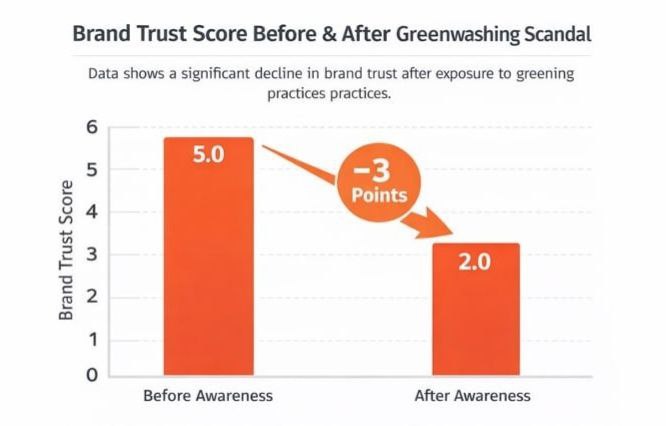
According to the market analysis done by us, the below graph represents the brand trust score after greenwashing.
The Rise of ESG Audits & Third-Party Assurance
An ESG audit is a systematic review of company performance against measurable environmental, social, and governance criteria. Conducted by independent third parties, these audits validate:
- Carbon emissions data
- Diversity and inclusion metrics
- Supply chain human rights compliance
- Governance and anti-corruption systems
Third-party assurance ensures that your ESG report isn’t just a narrative but a verifiable fact.
Regulatory forces are rapidly increasing the importance of ESG audits:
| Regulation | Region | Requirement |
|---|---|---|
| EU CSRD | European Union | Mandates audit-verified sustainability data for large companies |
| SEC Climate Rules | United States | Emphasise verified environmental reporting for listed firms |
| German Supply Chain Act | Germany / Global | Requires proof of ethical sourcing across supply chains |
These rules aren’t future trends — they’re current compliance realities. Companies that adopt ESG audits early gain a significant competitive advantage.
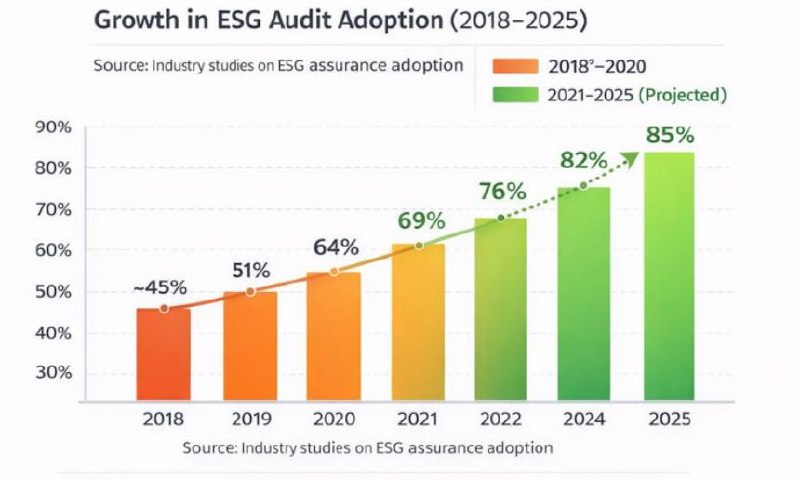
The graph below shows the growth analysis of the companies after ESG audit adoption.
Greenwashing in the Indian Context
In India, greenwashing is increasingly under regulatory scrutiny, with authorities moving to protect consumers and investors from misleading environmental claims.
The Central Consumer Protection Authority (CCPA) has issued “Guidelines for Prevention and Regulation of Greenwashing or Misleading Environmental Claims, 2024” to curb deceptive environmental marketing and protect consumers. Claims must be clear, verifiable, and evidence-based.
The Advertising Standards Council of India (ASCI) plays a key role in monitoring and flagging exaggerated or vague “green” claims across marketing communications.
From an investor perspective, SEBI mandates ESG disclosures through the Business Responsibility and Sustainability Reporting (BRSR) framework, pushing companies toward greater transparency and accountability.
Together, these mechanisms signal a clear shift in India toward stricter governance of sustainability claims and responsible corporate communication.
Why ESG Audits Boost Credibility & Investor Trust
Authentic ESG reporting isn’t just ethics — it’s economics:
- Higher investor confidence due to verified, comparable data.
- Lower cost of capital associated with transparent risk reporting.
- Improved stakeholder reputation, aiding recruitment and customer loyalty.
Real-World Success Stories
| Company | Approach | Impact |
|---|---|---|
| Patagonia | Shifted from sustainability slogans to independently audited environmental data | Boosted brand trust globally |
| Unilever | Integrated third-party ESG assurance into annual reporting | Stronger investor engagement and stock stability |
| Microsoft | Transparent audits of carbon emissions and renewable energy usage | Became a benchmark in tech sustainability reporting |
Steps Businesses Can Take Today
Five actionable steps to move from greenwashing risk to genuine ESG credibility:
| Step | Action | Details |
|---|---|---|
| 1 | Conduct a baseline ESG assessment | Understand your current sustainability footprint and identify gaps. |
| 2 | Standardise data collection systems | Implement consistent frameworks for measuring and tracking ESG metrics. |
| 3 | Engage an accredited third-party auditor | Independent verification builds trust and ensures regulatory compliance. |
| 4 | Integrate audit results into annual reporting | Make ESG disclosures a core part of your corporate communications. |
| 5 | Communicate transparently | Share both progress and challenges honestly with investors and customers. |
How Build To Sustain Can Help
At Build To Sustain, we empower companies to get ahead of the curve and benefit both in the short term as well as the long term.
Our Services:
- Sustainability Index Metric (SIM) Assessment
- Data management & monitoring solutions
- Sustainability storytelling for maximum impact (with real collaterals)
Ready to Start Your ESG Compliance Journey?
Get your SIM rating today and understand exactly where you stand on ESG compliance. Our assessment provides a clear roadmap with actionable recommendations tailored to your industry.

Founder, Build to Sustain Aparna drives ESG strategies and sustainable impact through data and storytelling. With deep expertise in decarbonization, circular economy, and responsible business practices, she helps organisations translate sustainability goals into measurable outcomes.