
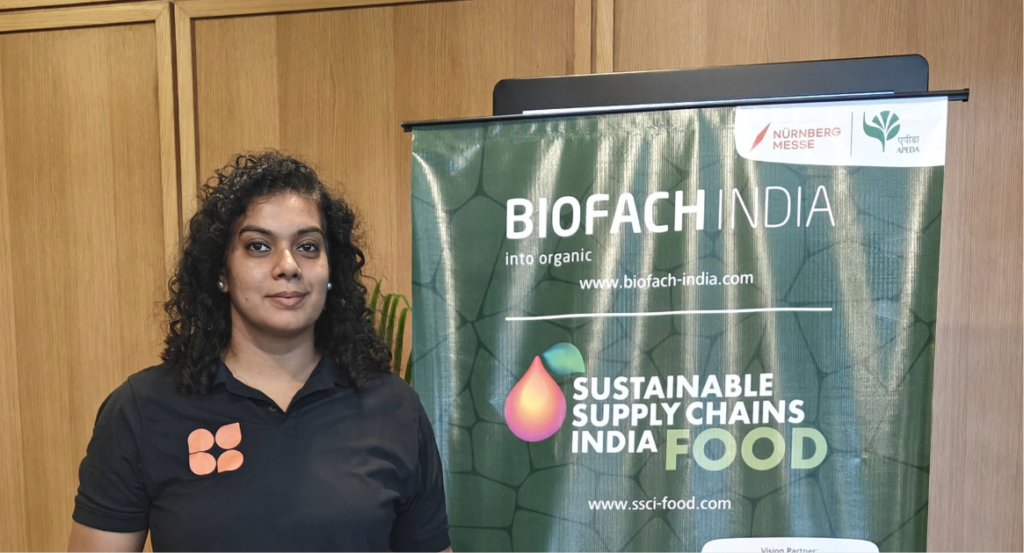
Our team spent three immersive days at BIOFACH INDIA 2026—Asia’s premiere trade fair and conference for the organic, natural, and millet sectors. Held at the India Expo Centre & Mart in Greater Noida, this 18th edition was jointly organized by NuernbergMesse India and the Agricultural and Processed Food Products Export Development Authority (APEDA), with GIZ serving as the official Vision Partner.
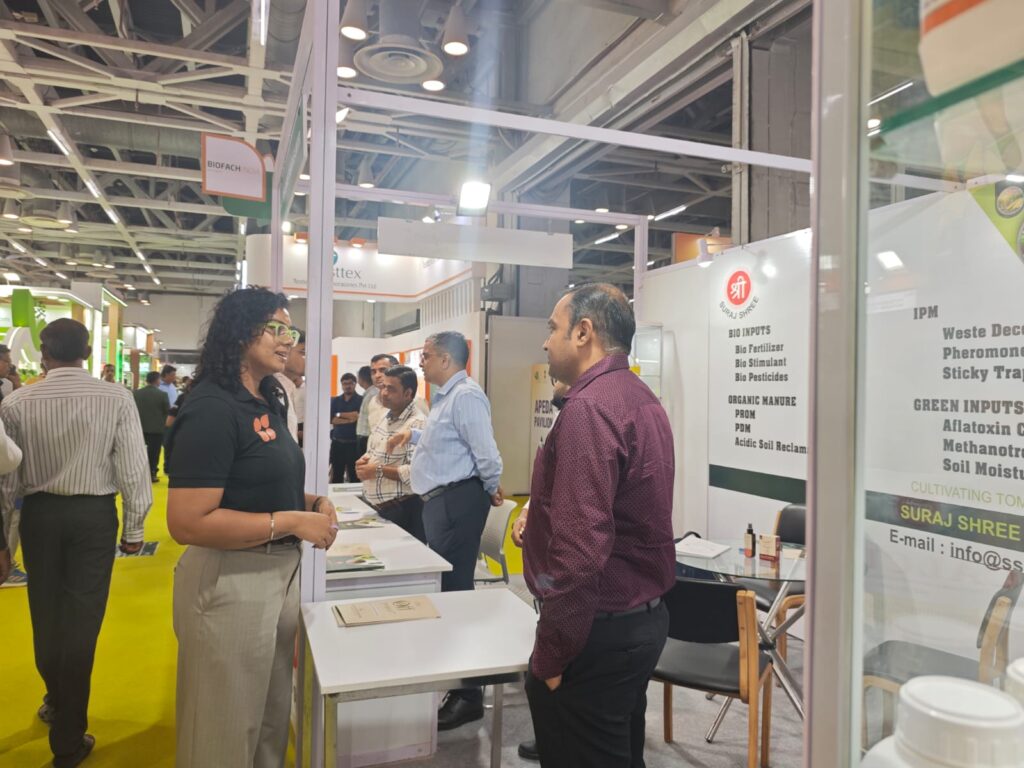
Co-located with NATURAL EXPO INDIA, MILLETS INDIA, and the Sustainable Supply Chain India – Food (SSCI–FOOD) platform, the summit brought together over 200 exhibitors, hundreds of international buyers, technology providers, policy architects, and grassroots agricultural collectives.
Our objective was clear: evaluate how grassroots agriculture, institutional capital, scientific verification, and corporate ESG strategies are aligning to build low-carbon, resilient, and climate-positive value chains. Below is our on-the-ground analysis of the event, the key technical seminars, B2B discussions with Farmer Producer Organisations (FPOs) and industry leaders, and our critical assessment of the event’s impact on global sustainability.

1. Grounded at the Grassroots: Empowering Farmer Producer Organisations (FPOs)
Walking through the vibrant exhibition floor, one of the most encouraging shifts at BIOFACH INDIA 2026 was the direct prominence given to smallholder farmer collectives. In past years, major trade shows were dominated almost exclusively by polished consumer brands. This year, thanks to dedicated backing from the Ministry of Rural Development (MoRD) under the DAY-NRLM scheme and GIZ, grassroots Farmer Producer Organisations (FPOs) occupied center stage.
During our interactive roundtables on the floor, our team engaged directly with leadership and representatives from several key regional FPOs:
- Baiga Chak Mahila Kisan Utpadak Producer Company Ltd.: Operating out of Madhya Pradesh, this women-led producer company—a joint initiative supported by the Ministry of Rural Development and Tata Trusts—serves as a benchmark for inclusive rural development. By mobilizing indigenous women farmers, they have built a structured supply chain for organic indigenous grains and forest produce, demonstrating how socio-economic equity directly enhances ecological stewardship.
- Kottavalasa FPO (Andhra Pradesh): Focused on scalable organic cultivation and natural farming practices, Kottavalasa showcased how aggregated smallholder farming can deliver high-yield organic crops while protecting regional soil health and reducing reliance on chemical inputs.
- Moteshwar FPO: Bringing traditional agricultural practices into the modern market, Moteshwar FPO highlighted the transition toward chemical-free food systems and local processing capabilities that retain value within rural communities.
Strategic Takeaways for Supply Chain Resilience:
- Direct Off-Take Models: Corporations and bulk buyers must move away from multi-layered intermediary purchasing. Establishing long-term off-take agreements directly with FPOs stabilizes farmer incomes while guaranteeing traceable raw materials for processors.
- Participatory Guarantee Systems (PGS) and Group Certification: Traditional third-party organic certification remains cost-prohibitive for individual smallholders. The wider adoption of group certification and digital ledger tracking empowers FPOs to meet international export compliance without crippling overhead costs.
- Gender-Inclusive Agrarian Economies: Women-led FPOs like Baiga Chak demonstrate that empowering female agricultural workers directly correlates with higher reinvestment in community health, soil conservation, and post-harvest technology.
2. Science-Backed Integrity: Corporate Stewardship at the Himalaya Wellness Pavilion
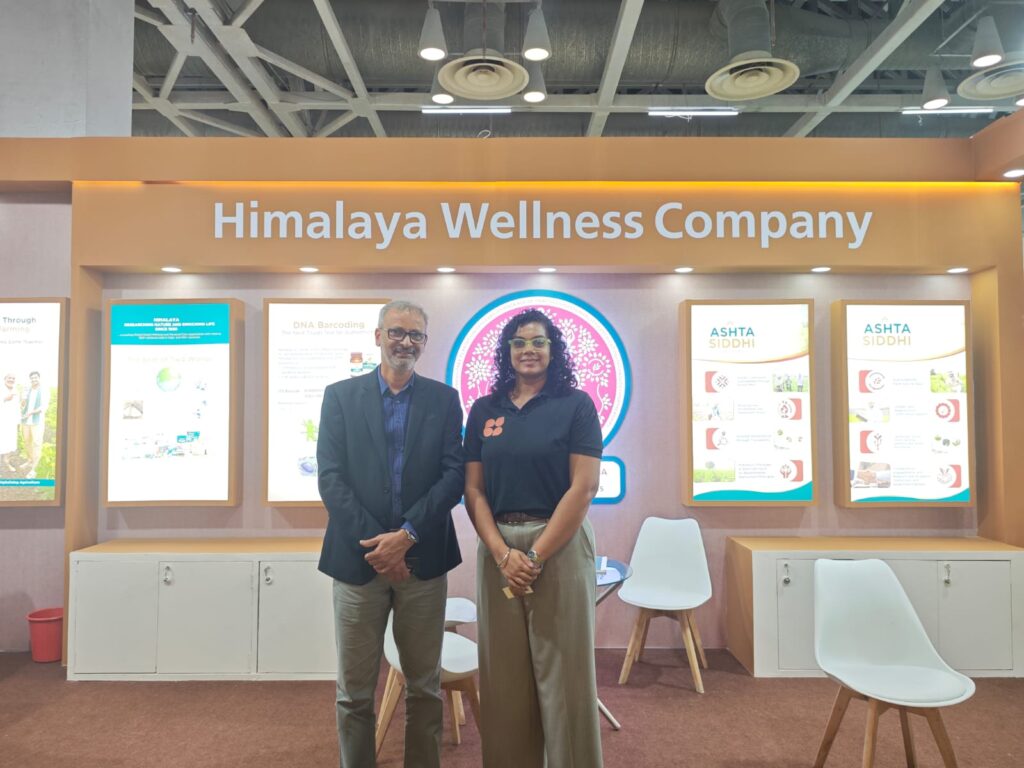
As consumer demand for organic and natural products accelerates, market expansion is threatened by greenwashing, supply chain opacity, and botanical adulteration. A central focus of our delegation was examining how established corporate actors are validating their sustainability claims through technical rigor.
At the Himalaya Wellness Company showcase, our team explored how traditional botanical knowledge is being fortified with advanced scientific testing and structured ESG frameworks.
Key Innovations and Program Pillars Featured:
- DNA Barcoding for Species Verification: To eliminate species substitution and adulteration in natural product supply chains, Himalaya has integrated molecular testing directly into raw material procurement. By utilizing DNA barcoding, every batch of wild-harvested or cultivated herbs can be verified at the genetic level prior to processing.
- The “Ashta Siddhi” Sustainable Sourcing Framework: Himalaya highlighted its multi-pronged approach to sustainable agriculture, built around eight core commitments:
– Yield Through Sustainable Farming: Maximizing land productivity without synthetic nitrogen fertilizers or chemical pesticides.
– Working with Farmers: Cultivating fair-trade contracts and capacity-building programs across rural farming clusters.
– Sustainability From Soil to Seed: Maintaining soil microbiomes through regenerative tilling and organic compost inputs.
– Organic & Regenerative Farming: Promoting crop rotation, multi-cropping, and natural pest management.
– Digitalizing Agriculture: Deploying handheld technology, GIS mapping, and remote monitoring to assist contract farmers in optimizing water usage and predicting crop yields.
This dual emphasis on molecular verification and field-level regenerative practices illustrates a mature model of corporate stewardship: one where ecological commitments are embedded directly into quality assurance and supply chain operations.
3. Deep-Dive Summaries: Key Seminars & Technical Conclaves
The conference agenda across all three days delivered dense, actionable technical sessions led by international policy experts, agronomic scientists, and financial strategists.
Session 1: “Scope 3 Decarbonization and Agrarian Carbon Accounting“
Organized in collaboration with GIZ, this seminar addressed the complex challenge of measuring and mitigating Scope 3 emissions within agricultural value chains.
- Baseline Emission Intensities: Agriculture contributes significantly to global greenhouse gas (GHG) emissions through synthetic fertilizer production, enteric fermentation, and land-use change. Switching to regenerative organic inputs yields an immediate reduction in operational carbon intensity.
- Integration with Carbon Markets: Experts unpacked how regenerative farming practices such as minimal tillage, cover cropping, and biochar application—can generate verifiable soil organic carbon (SOC) credits. These credits can either be retired internally by food enterprises to meet net-zero targets or monetized on voluntary carbon markets.
Session 2: “Millets as Climate Sinks and Security Anchors”
Co-located under the MILLETS INDIA umbrella, this conclave explored the strategic role of ancient grains (such as finger millet, pearl millet, and sorghum) in mitigating climate risk
Panelists emphasized that millets represent a cornerstone for climate adaptation in tropical regions. Incorporating millets into industrial food processing reduces water stress on regional aquifers while creating low-carbon food alternatives for urban consumers.
Session 3: “Navigating International Organic Harmonization & Export Compliance”
Led by senior officials from APEDA, this session provided export-oriented enterprises with a roadmap for navigating shifting international regulatory landscapes, including the European Union’s updated organic import regulations and deforestation-free supply chain mandates (EUDR).
The key consensus: compliance can no longer be handled through periodic manual audits. Exporters must transition to real-time Digital Measurement, Reporting, and Verification (dMRV) systems that link geographic plots directly to processing facilities and shipping manifests.
Final Perspective
Attending BIOFACH INDIA 2026 reinforced a fundamental truth: the transition toward a sustainable, climate-resilient global economy depends on our ability to honor and regenerate the earth. By connecting grassroots farming communities with advanced scientific tools, responsible corporate capital, and forward-looking policy frameworks, events like BIOFACH INDIA provide a robust blueprint for systemic progress.
Our team has begun to apply the Sustainability Index Metric (SIM) to a cross-section of select corporate exhibitors from BIOFACH INDIA 2026. Their teams will be interviewed and assessed on governance, traceability, ecological stewardship, BRSR-aligned disclosure readiness, and related areas. If your organisation exhibited at BIOFACH INDIA 2026 and wants visibility into how it scores, or wants to begin your sustainability reporting, reach out to us.