
If you run a small or medium-sized business, hearing the letters “ESG” probably makes you think of giant corporations, thick compliance manuals, and expensive consultants.
You might assume it is something you only need to worry about once you hit 500 employees.
That used to be true. Today, if you are a manufacturer, exporter, or service provider supplying larger companies, ESG (Environmental, Social, and Governance) is directly tied to your revenue. Global buyers and enterprises alike are under strict pressure to report on their entire supply chain. That means they are now auditing you before signing or renewing contracts.
At Build to Sustain, we work with businesses to turn ESG from a confusing compliance headache into a clear business advantage. You do not need a massive sustainability department to get started. You just need real, verifiable data and a practical plan that fits your size.
What ESG Actually Means for an SME
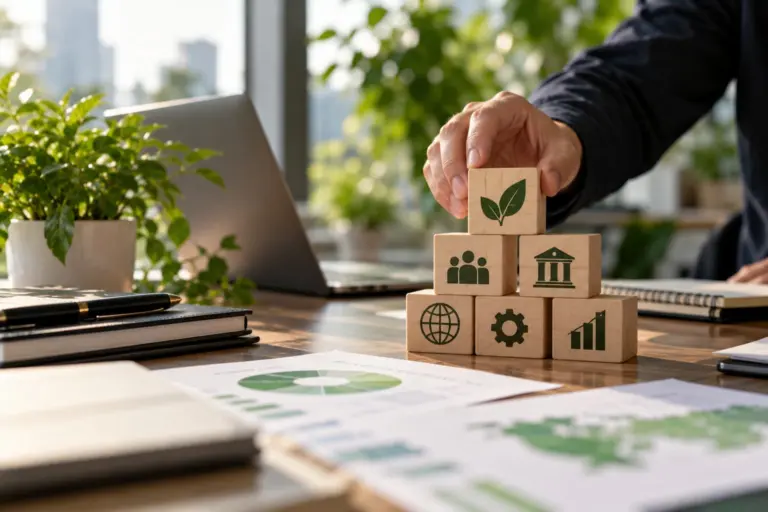
At its core, ESG is just a structured way of proving how responsibly your business operates. Instead of looking only at your financial profit, buyers, banks, and regulators look at three areas:
- Environmental: How your operations use energy, manage waste, and track carbon emissions.
- Social: How you protect worker safety, pay fair wages, secure customer data, and support your local community.
- Governance: How you run the company, keep honest financial records, prevent bribery, and make transparent decisions.
Big corporations report under complex frameworks like BRSR, GRI, or CSRD. As a small business, you do not need to master every global rulebook on day one. Your goal is much simpler: replace guesswork with documented proof so you can show buyers and lenders that you are a low-risk, reliable partner.
Why Small Businesses Cannot Afford to Wait
Adopting ESG is no longer just about goodwill. For SMEs and exporters, it solves four immediate business problems:
1. Passing Enterprise and Global Buyer Audits
Large enterprises have to measure their Scope 3 emissions (the emissions created by their suppliers). If you manufacture parts, package goods, or provide IT services to bigger brands, their procurement teams will ask for your energy, waste, and safety records. Companies with verified ESG data win these tenders. Companies without it get dropped from vendor lists.
2. Preparing for Export Rules Like CBAM
If you export goods like steel, aluminum, cement, or chemicals to Europe, regulations like the Carbon Border Adjustment Mechanism (CBAM) require accurate carbon tracking. Starting your data collection early prevents sudden export penalties and border delays later.
3. Cutting Daily Operating Costs
You cannot reduce waste you do not see. Tracking your electricity, fuel, and raw material usage highlights exactly where money is leaking out of your operations. Fixing power inefficiencies, optimizing logistics, and reducing packaging waste directly lower your monthly overhead.
4. Accessing Better Bank Loans and Funding
Banks and financial institutions increasingly look at ESG risk before approving business loans. Showing strong governance and resource efficiency improves your credit profile and opens doors to green financing options.
Practical ESG Actions That Fit Small Budgets
Most online guides tell small businesses to “audit executive pay” or “build solar farms.” That is not realistic for most founders. Instead, focus on practical, measurable actions you can take right now:
| ESG Pillar | Practical Small Business Actions |
| Environmental | Track monthly electricity, diesel/petrol, and water bills in one central place. Switch factory or office lighting to LEDs. Measure and reduce packaging and raw material scrap. Partner with certified local recyclers. |
| Social | Maintain clear workplace safety logs and run regular safety training. Pay fair wages on time. Lock down customer and employee data with basic cybersecurity rules. Source supplies from local, ethical vendors. |
| Governance | Write down a clear code of conduct and anti-bribery policy. Keep clean, audit-ready financial records. Set up a safe, simple way for workers to report safety or workplace issues. |
How to Start Your ESG Journey in 4 Steps
You do not need to overhaul your company overnight. Follow these four steps to build a credible foundation over the next few months.
Step 1: List What You Already Do
Before spending a single rupee, write down the responsible practices already happening in your business. Maybe you already follow strict factory safety checks, recycle scrap metal, or enforce strong data privacy rules. Documenting your existing habits is the fastest way to build your baseline.
Step 2: Focus on What Matters to Your Industry
Do not waste time on metrics that do not apply to you. Pick two or three high-impact areas based on what your business actually does:
- If you run a manufacturing unit or warehouse, focus on electricity usage, fuel consumption, waste disposal, and worker safety.
- If you run an IT, software, or service company, focus on data security, office energy use, fair hiring, and employee wellbeing.
Step 3: Move Off Scattered Spreadsheets
Writing down a policy is not enough anymore. Buyers and auditors want proof, not vague promises. Stop keeping utility bills, safety logs, and vendor records scattered across random folders and emails. Use a dedicated tracking system (like our Lenz dashboard or Karbon tool) to log your monthly resource and emissions data cleanly so it is ready whenever a client asks.
Step 4: Get Benchmark Clarity and Share Your Progress
Once you have a few months of clean numbers, benchmark where you stand. Getting an independent baseline assessment, such as a SIM Rating, shows you exact gaps in your operations and gives you a clear roadmap to improve. Share your honest progress with clients in your pitch decks and vendor proposals, and avoid exaggerating claims (known as greenwashing), which quickly destroys buyer trust.
Build a Business That Lasts
ESG is not about achieving zero emissions overnight. Buyers, banks, and regulators do not expect a small business to look like a Fortune 500 company. They want to see transparency, accurate data, and steady, measurable improvement.
If you are ready to move past guesswork and make your business audit-ready for bigger contracts, ESG consulting from Build to Sustain can help. Whether you need a baseline SIM Rating, supplier assessments through Bridge, or a simple way to track your resources with Lenz, our team helps you turn sustainability into real business growth.