Company Overview
GOODLAYS
Goodlays manufactures laminated fabrics across three product lines: standard laminated fabric, laminated fabric with EVA, and laminated fabric with PU foam, supplying approximately 96,000 metres per year. Raw materials include knitted fabrics and PU foam from India and adhesive from Singapore.
A compact enterprise with 60 permanent employees, Goodlays has an early-stage sustainability profile. Documented practices and credentials include recycled-content packaging, domestic sourcing of most inputs, and BIS certification. The assessment also identified gaps in environmental monitoring, policy documentation, and formal governance structures.
The Challenge
Performance. Proof. Recognition.
Goodlays had several documented sustainability-related practices but lacked water and energy monitoring, formal policies, and established governance structures across several assessment areas. The assessment aimed to establish a clear baseline of current performance and identify priority actions for further development.
OUR APPROACH
Evidence. Measure. Benchmark.
Build to Sustain assessed Goodlays across the seven pillars, evaluating its documented practices and certifications while identifying foundational areas requiring further development. The assessment provides a baseline for future improvement cycles.
EXECUTION
Validate. Rate. Certify.
Goodlays completed the assessment. Documented evidence included 80% recycled-content packaging, domestic sourcing of most inputs, BIS certification for products and management systems, PPE provision, and minimum-wage compliance.
The assessment also identified several areas where formal systems or supporting documentation were not yet in place, including water metering and recycling, formal waste and labour policies, documented training, grievance mechanisms, and sustainability reporting.
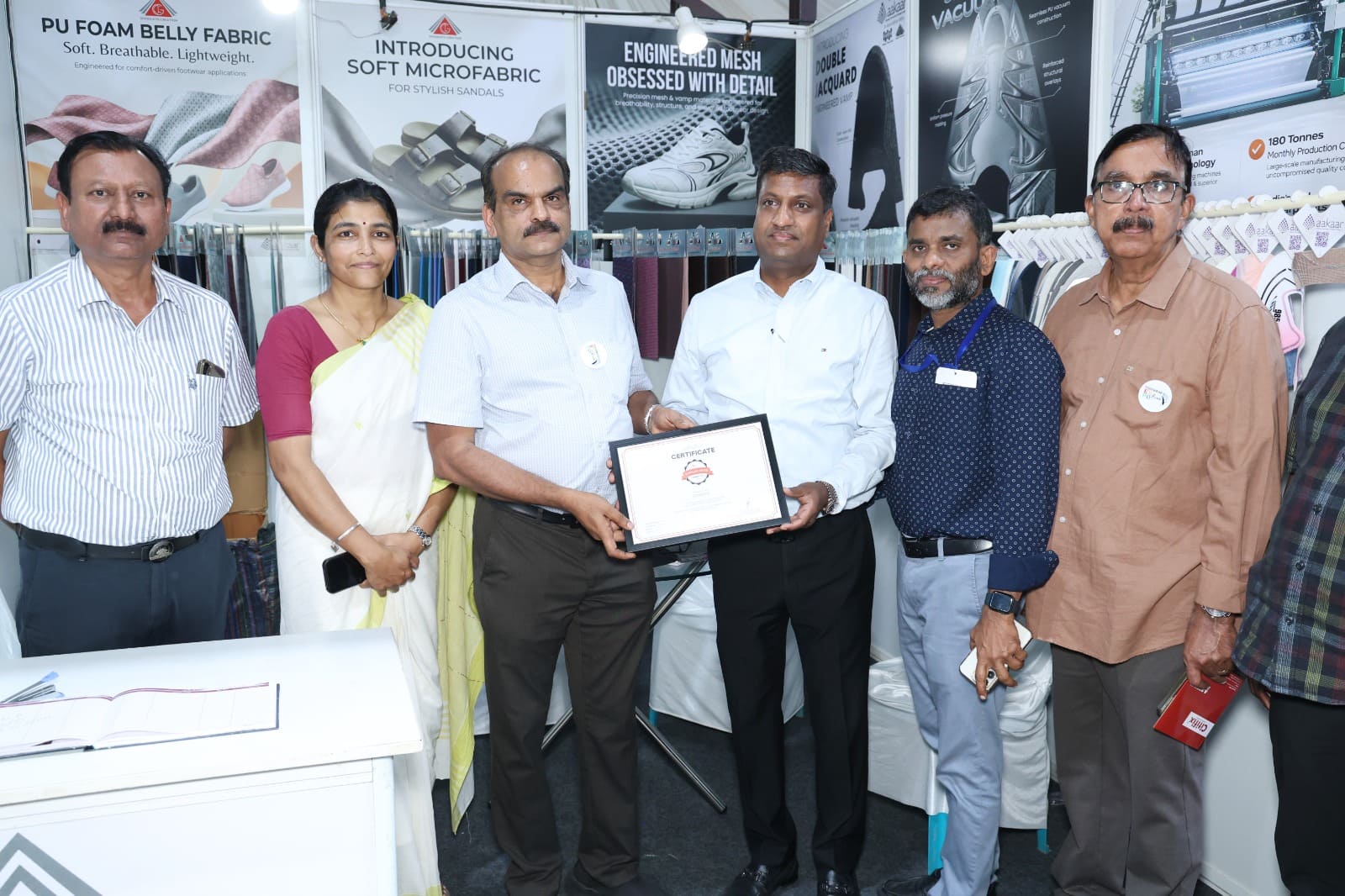
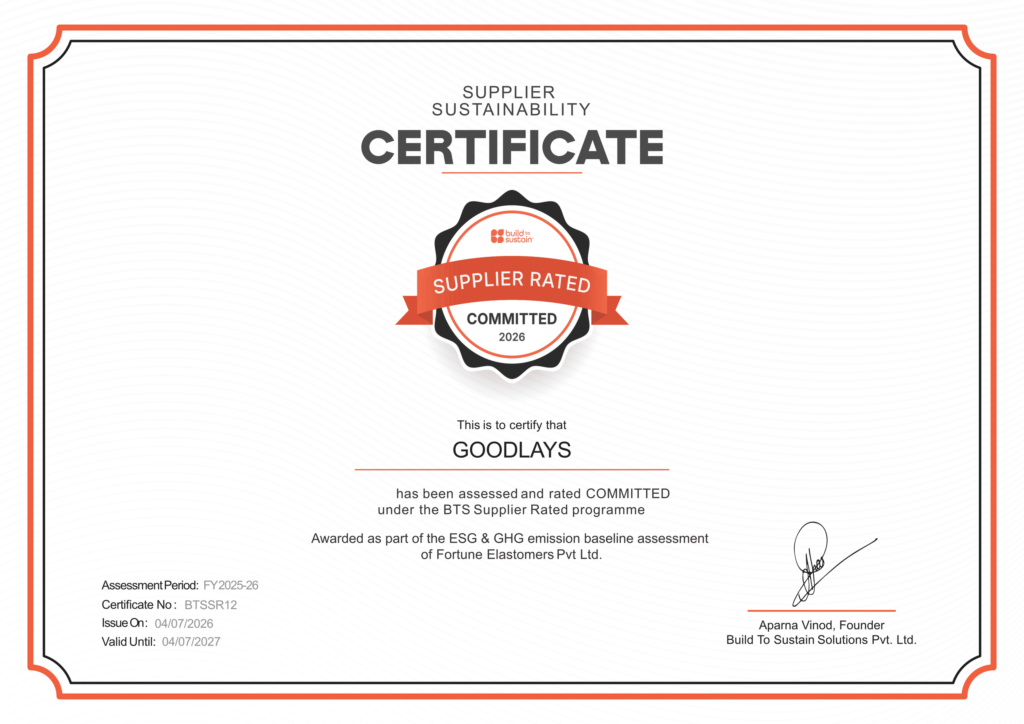
The result was a full scorebook and a Committed-tier certificate with a prioritised improvement roadmap.
EXECUTION
The Assessment in Detail
Goodlays was rated Committed with an overall score of 29/100, the lowest score in the assessed cohort. The score reflects the documented practices and evidence available at the time of assessment and provides a baseline for identifying improvement priorities.
Pillar scorecard
| Energy & Climate | Water & Effluent | Waste & Circularity | Materials & Product | Health & Safety | Labour & Social | Governance |
|---|---|---|---|---|---|---|
| 2/15 | 3/10 | 3/12 | 4/13 | 5/15 | 5/15 | 7/20 |
DIMENSIONAL ANALYSIS
Environment 24/100
80% recycled-content packaging and fully domestic sourcing of most inputs are genuine positives, but electricity monitoring is minimal, and water metering, recycling, rainwater harvesting, energy audits, and GHG tracking are not in place.
Social 33/100
PPE provision and minimum-wage compliance are foundations to build on, but formal training programmes, a documented grievance mechanism, and written child/forced-labour and equal-opportunity policies are not yet established.
Governance 35/100
BIS certification for products and management, and supplier screening for BIS, are in place. A Code of Conduct, sustainability reporting, and a designated ESG responsibility are the main gaps.
STANDOUT STRENGTHS
- 80% recycled-content packaging and fully domestic sourcing of most raw materials.
- BIS certification for both products and management systems, with supplier screening for BIS in place.
- PPE provision and minimum-wage compliance as foundations to build on.
Improvement Roadmap
The assessment identified the following priority actions:
| Focus area | Recommended action |
|---|---|
| Environmental monitoring | Install water meters and establish basic energy tracking to strengthen environmental measurement. |
| Foundational policies | Establish a waste-management policy, written labour policies, and a grievance mechanism. |
| Governance | Document a Code of Conduct and designate responsibility for sustainability. |
Key Takeaways
- Goodlays earned Committed, reflecting an early-stage but genuine start.
- The assessment’s core value is a clear, prioritised roadmap: monitoring first, then policies, then governance.
- These foundational steps would position Goodlays to reach Bronze in its next assessment cycle.