
Company Overview

Winner Nippon Leatherette Pvt. Ltd. manufactures PVC and semi-PU synthetic leather, supplying approximately 500,000 metres per year. PVC powder is partially sourced from India, China, and Korea. The facility consumes approximately 1.6 million kWh of electricity annually and uses coal-fired boilers for process heat.
A workforce of 125 supports the operation. The company has undergone audits by international customers and has plans to transition away from coal. However, its formal safety-system documentation and social-data disclosure require further development.
The Challenge
Performance. Proof. Recognition
Winner Nippon had documented environmental plans and external audit experience, but its formal safety-system documentation and social-data disclosure were limited. The assessment aimed to document existing practices and identify the gaps between planned environmental improvements and their implementation.
OUR APPROACH
Evidence. Measure. Benchmark.
Build to Sustain assessed Winner Nippon across the seven SIM pillars, recording its third-party audit credentials and environmental plans while assessing implementation against documented evidence.
EXECUTION
Validate. Rate. Certify.
Winner Nippon completed the assessment. Evidence included third-party audits by international fashion and automotive customers, planned solar installation and pellet-boiler transition, water recycling, rainwater harvesting, and approximately 25% to 30% female workforce representation.
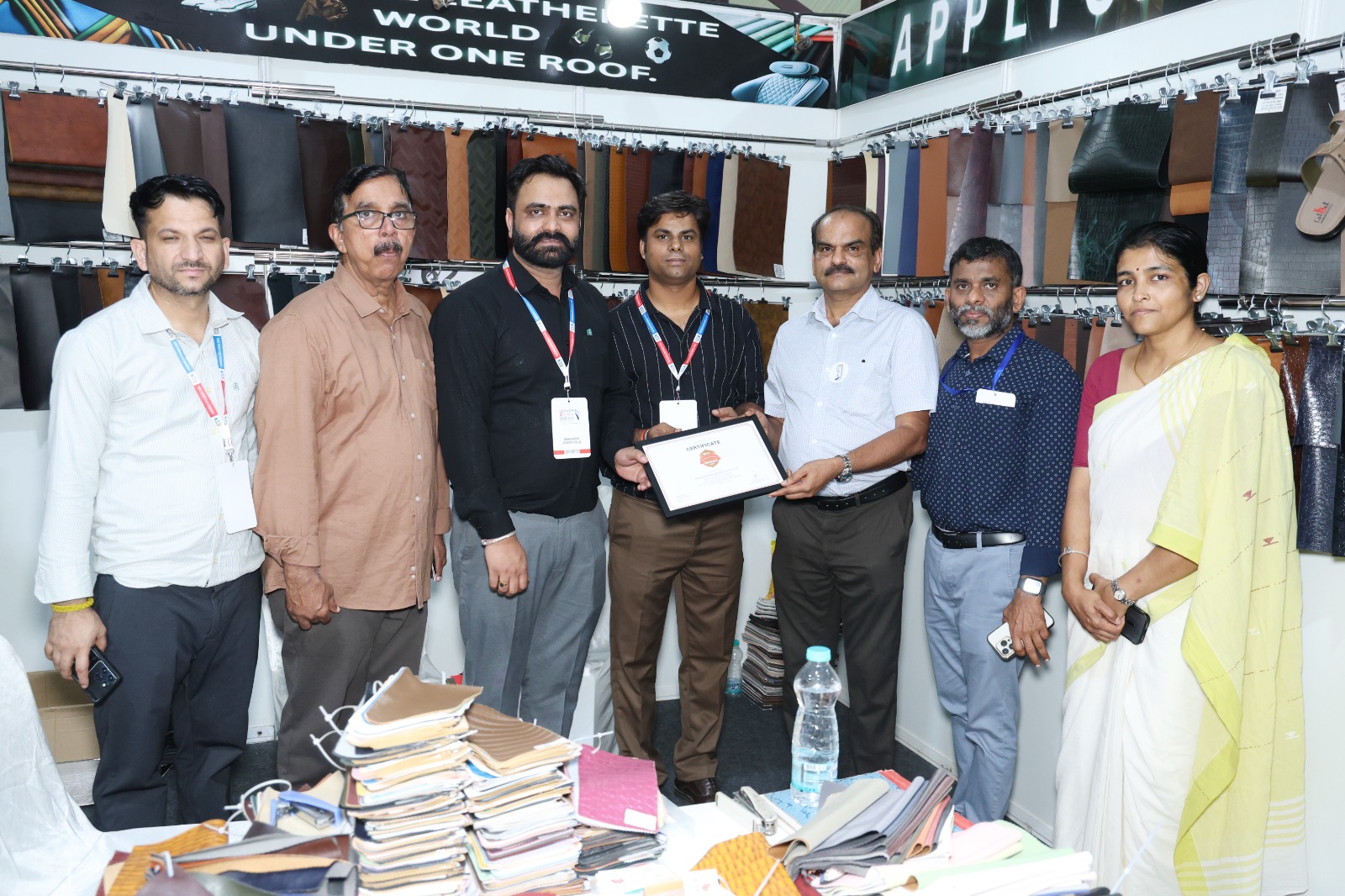
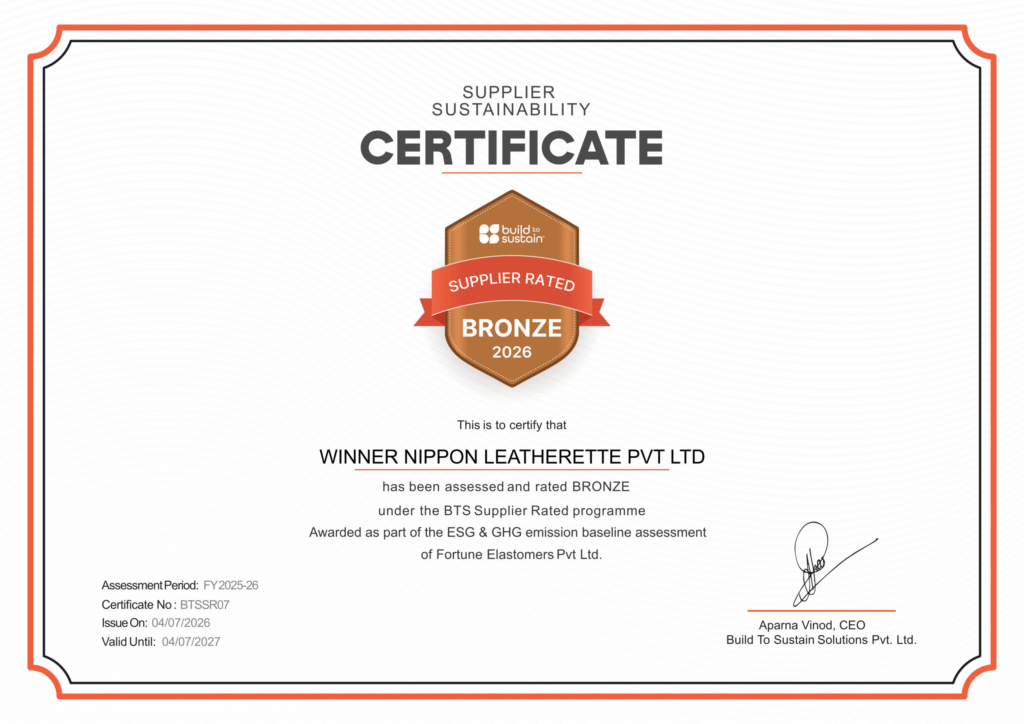
The result was a full scorebook and a Bronze-tier certificate.
EXECUTION
The Assessment in Detail
Winner Nippon was rated Bronze with an overall score of 44/100. Its Environmental and Water & Effluent results were areas of relative strength, while Health & Safety and Labour & Social presented the main opportunities for improvement.
Pillar scorecard
| Energy & Climate | Water & Effluent | Waste & Circularity | Materials & Product | Health & Safety | Labour & Social | Governance |
|---|---|---|---|---|---|---|
| 4/15 | 9/10 | 8/12 | 5/13 | 3/15 | 5/15 | 10/20 |
DIMENSIONAL ANALYSIS
Environment 52/100
Water metering, recycling for irrigation, and rainwater harvesting (WE 9/10), energy audits, and a formal waste policy with authorised disposal and fly-ash circularity. Renewable energy (solar) and a coal-to-pellet boiler shift are planned but not yet executed (EC 4/15).
Social 27/100
The assessment recorded approximately 25% to 30% female workforce representation and community initiatives through a dedicated foundation. However, the occupational health and safety management system had not yet been formalised, and some workforce information was not disclosed. Health & Safety scored 3/15 and Labour & Social scored 5/15.
Governance 50/100
Third-party ESG audit credentials from major international brands, a Code of Conduct and anti-bribery policy, BIS-compliant products, and a business-continuity plan.
STANDOUT STRENGTHS
- Third-party ESG audit experience involving international fashion and automotive customers.
- A notably high ~25–30% female workforce and community engagement through a foundation focused on girl-child education.
- Solid water stewardship (9/10) and proactive plans to move from coal to a pellet-based boiler and add solar.
Improvement Roadmap
The assessment identified the following priority actions:
| Focus area | Recommended action |
|---|---|
| Health & Safety (3/15) | Formalise the occupational health and safety management system and establish systematic safety-metric tracking. |
| Social disclosure | Complete workforce and welfare data disclosure, which currently understates genuine practice. |
| Energy execution | Execute the planned solar installation and pellet-boiler transition, and set water-reduction targets, to convert plans into scored practice and reach Bronze. |
Key Takeaways
- Winner Nippon earned Bronze, with distinctive audit credentials and concrete environmental plans.
- Implementing the planned solar and pellet-boiler projects would strengthen the company’s Energy & Climate performance.
- Formalising the occupational health and safety system and strengthening workforce data disclosure are key areas for improvement.